Nilkahm Carrion Bees
Contents
 Nilkahm
Description
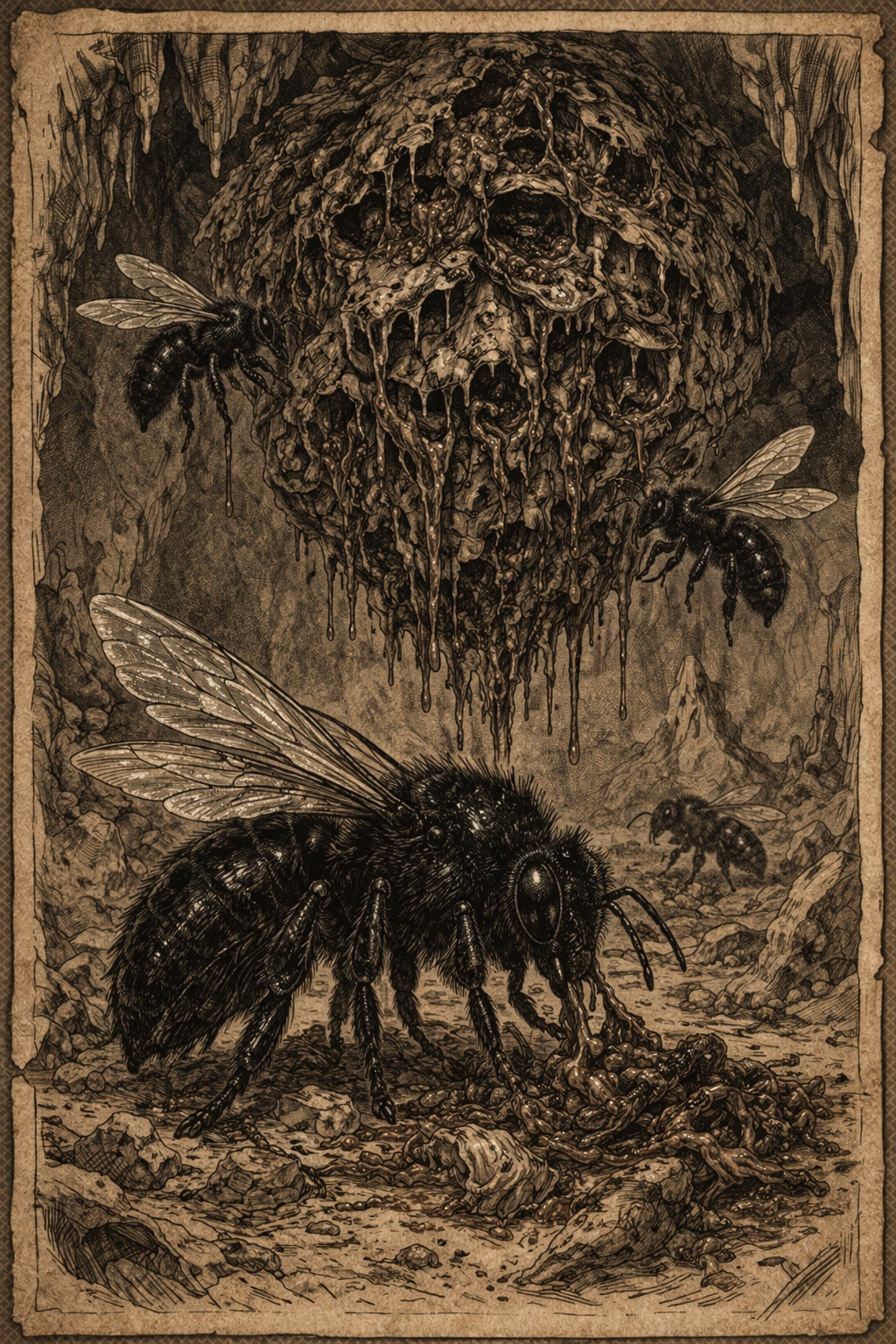
The Nilkahm Carrion Bees Bees are a subterranean hymenopteran species inhabiting the deepest cave systems of Nilkahm mountain range, where lightless conditions and limited flora have driven a complete divergence from nectar-based feeding. Morphologically comparable to surface-dwelling vultures, these specimens exhibit darkened chitin, reduced ocular reliance, and powerful mandibles adapted for the processing of decaying organic matter. Their colonies construct hives suspended from cavern ceilings using a composite of chewed stone particulates, mineral-rich slurry, and decomposed tissue, forming dense, resin-like structures that house both brood and stores of so-called “meat honey,” a proteinaceous substance derived from Nilkahm Carrion Bees rather than pollen.
Ecologically, the species functions as a primary decomposer within Nilkahm’s closed cave environments. Of particular note is their observed association with the Therel, the so-called wardens of the mountain. Field accounts suggest a deliberate tolerance , if not outright cultivation , of these hives by the Therel, who appear to utilize the bees’ efficiency in organic breakdown to maintain the balance of their subterranean domain. This relationship has given rise to persistent rumours among dwarf populations that the Therel employ Nilkahm Carrion Bees hive colonies as a discreet means of disposing of unwanted individuals, though direct evidence remains circumstantial.
Feeding behaviour is both specialized and unsettling. Upon locating suitable remains, worker bees will typically enter the body through natural orifices , most commonly the ocular cavities or oral passage , allowing access to softer internal tissues where decomposition is most advanced. From within, they macerate and ingest material, later regurgitating it into the hive for enzymatic conversion into their nutrient stores. This method minimizes external exposure and accelerates internal breakdown, rendering carcasses hollowed and desiccated with remarkable efficiency. Despite their size , often comparable to that of a small hound, they display limited aggression unless provoked, their role defined less by predation than by relentless reclamation of the dead.